
Duty and the Evasion of Responsibility
The Narrow Road to the Deep NorthThis flow traces how commanders and soldiers use duty, obedience, and destiny to explain actions whose consequences remain painfully personal.
increasing Bearing strength in each event
 decreasing
Bearing strength in each eventdecreasingA Railway for the Emperor
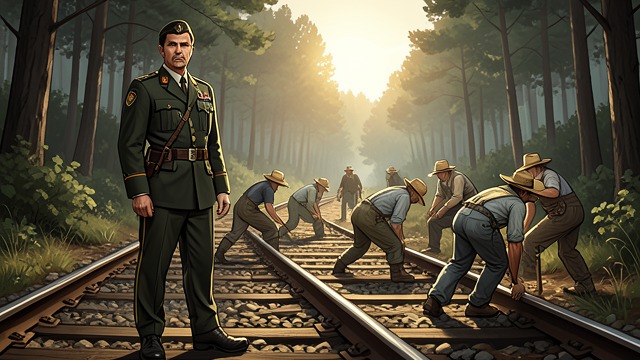
Duty as Purpose
An Imperial Mission
Major Nakamura understands the railway as service to the Emperor and a test of Japanese spirit. The mission gives meaning to work that otherwise seems futile.
Responsibility Reassigned
Once the project is framed as destiny, the suffering it requires can be treated as someone else’s concern. Duty becomes both motivation and protection from moral scrutiny.
Orders Without Alternatives
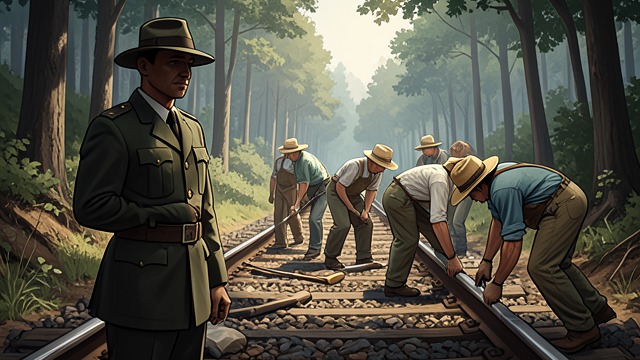
A Command Passed Down
The Demand
Colonel Kota insists the railway be completed even if most prisoners die. Major Nakamura accepts the order despite recognizing its human cost.
The Chain of Obedience
Each officer can claim that the decision came from above. The resulting harm is real, while responsibility appears to dissolve across ranks.
The Goanna’s Training
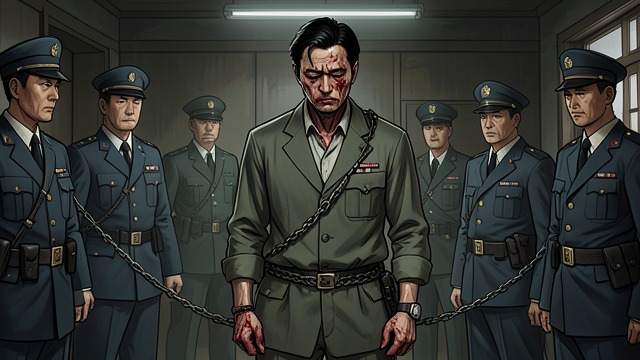
Violence Learned as Duty
Colonial Subordination
Choi Sang-min is beaten and trained to obey Japanese authority, then assigned to control Allied prisoners. He reproduces the violence that has been used to discipline him.
Agency Within a System
His oppression helps explain his conduct but does not make the prisoners’ suffering unreal. The novel keeps structural coercion and personal action in view at once.
Dorrigo’s Medical Choices
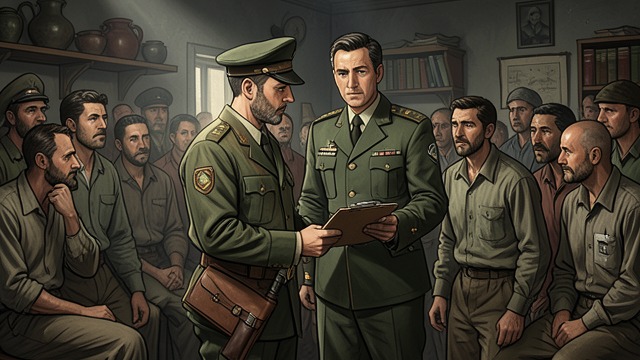
Duty as Triage
Choosing Among Men
Dorrigo Evans calculates which prisoners may survive work and which should remain in the hospital. He knows every available option exposes someone to further harm.
A Different Complicity
Unlike the Japanese command, Dorrigo’s authority is used to protect where possible. Yet his decisions still participate in a system he cannot overthrow.
The Postwar Victim Story
Goodness Reconstructed
A New Account
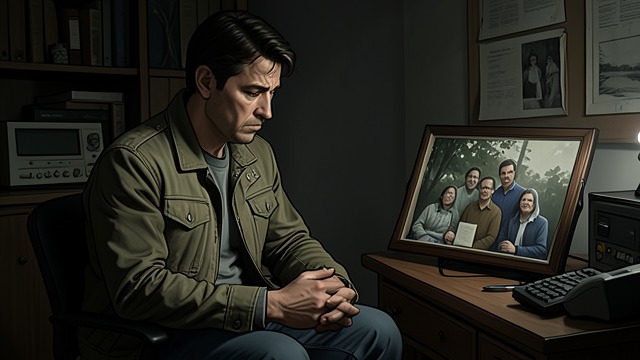
Tenji Nakamura sees himself as a gentle, honourable family man and remembers his wartime service as necessary. Time and self-exculpation weaken his memory of his victims.
The Moral Question
His private kindness does not erase his role in the camp. The story asks whether goodness can be separated from the obedience that once licensed cruelty.
During the planning and early construction of the railway
When Colonel Kota tells Nakamura to finish the work at any cost
Before and during Choi’s service as a POW camp guard
During the daily negotiations over which prisoners will work
During Nakamura’s postwar life and final illness
